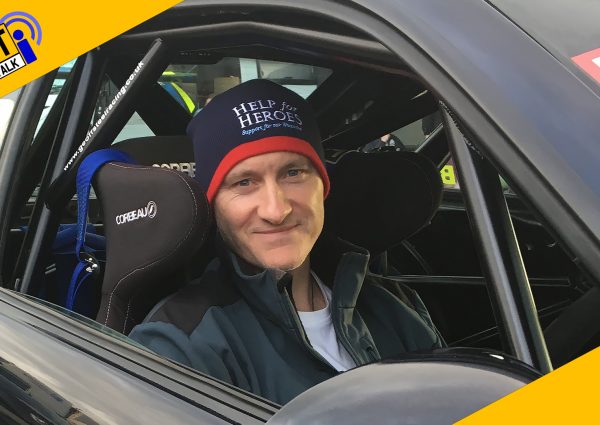


In this episode of the UKMotorTalk Podcast we welcome back Jules McBride to update us on driving in the first two rounds of the Britcar Endurance Championship. Jules also introduces us to Elliott Fewster, 2025 BTRDA Junior Rallycross Champion and currently driving in the 750MC Swift Sport Challenge, who he is mentoring as part of the FIA’s disability in motorsport programme.
Keep up to date with the UKMotorTalk Podcast:
Add https://feeds.feedburner.com/ukmotortalk
or https://feeds.acast.com/public/shows/ukmotortalk
to (or search for UKMotorTalk on)
your podcasting app of choice


AND NOW even on YouTube!
Keep an eye on https://ukmotortalk.co.uk/podcast/
Follow @UKMotorTalk on all of the socials!
Useful Links:
Elliot’s Instagram – https://www.instagram.com/elliott_fewster_racing
Jules’s Instagram – https://www.instagram.com/julianmcbride_racing_coaching/
Britcar Endurance – https://www.britcar-endurance.com/
750MC Swift Sport Challenge – https://750mc.co.uk/formulae/swift-sport-challenge/
AI Episode summary
This summary of the UK MOTOR TALK podcast episode features hosts Mike Gates, Jim Baxter, and Graham Benge, alongside guests Julian “Jules” McBride and Elliott Fewster, the 2025 BTRDA Junior Rallycross Championship winner. The conversation covers a wide range of topics, including tributes to a racing legend, technical insights into circuit racing and rallycross, the challenges of racing with a disability, and the impact of the FIA mentoring programme.
Tribute to Alex Zanardi
The episode begins with a somber tribute to Alex Zanardi, who passed away at the age of 59. The hosts and guests describe him as an “absolute legend” and a deeply inspiring figure in the world of motorsport. His death was reportedly linked to injuries sustained in a handcycle accident involving a lorry, a trauma from which he never fully recovered.
Jim reflects on Zanardi’s racing career, noting that while his Formula One stints—including periods with Williams, Lotus, Minardi, and Jordan—were somewhat unsuccessful, he truly “found his feet” in IndyCar. His aggressive and raw racing style was perfectly suited to that series, highlighted by his famous overtake at the “Corkscrew” at Laguna Seca.
Beyond his professional racing, the group discusses Zanardi’s incredible resilience following the accident that cost him both legs. He transformed his life, becoming a gold-medal-winning Paralympian and even finding success at Brands Hatch and in touring cars. Jim recalls meeting Zanardi, noting his “beaming smile” and infectious positive attitude. Even when asked about the fear of crashing again, Zanardi joked that it was now easier to reattach his legs since he carried a “spare pair” and a screwdriver in his van .
Jules’ Success at Oulton Park
The focus then shifts to Jules’ recent performance in Round Two at Oulton Park, which he considers his favorite UK track. Jules explains the technical challenges of his class, where he competes against Ginettas, McLarens, Astons, and Porsches. Because his car cannot match the cornering ability of some of these rivals, the series uses “Balance of Performance” (BoP) measures, such as adjusting pitstop times, to level the playing field.
Jules credits his success to consistency and the “age-old adage” that to finish first, one must first finish. Unlike the “carnage” of Round One, the driving standards at Oulton Park were much improved. He describes a thrilling final 15 minutes of the race, scrapping “three abreast” into Cascades corner . A late safety car allowed his tires to cool, giving him the grip needed for a final push. He ultimately finished fourth overall and third in class, earning a podium and the “Driver of the Weekend” award.
Elliott Fewster’s Rise in Rallycross
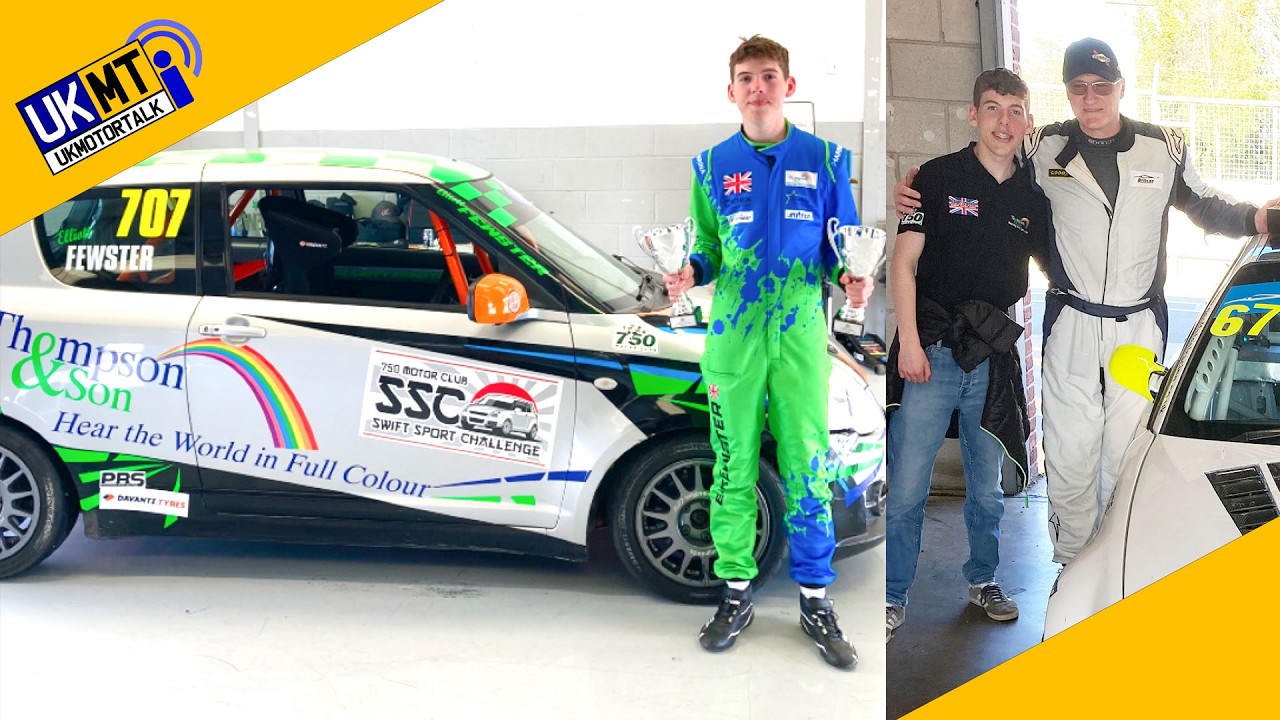
Elliott Fewster joins the conversation to discuss his burgeoning career. Elliott began in junior saloon cars in 2022 before moving to Junior Rallycross in 2024. Despite rolling his car at the start of his first season, he managed to win every subsequent final, eventually finishing as the championship runner-up.
Elliott provides insights into the rallycross format, which consists of three heats and a final. He notes that the racing is exceptionally fast-paced, often determined by the very first lap. He also mentions the “Joker Lap”—a longer route used in some championships to force strategic thinking and separate the field.
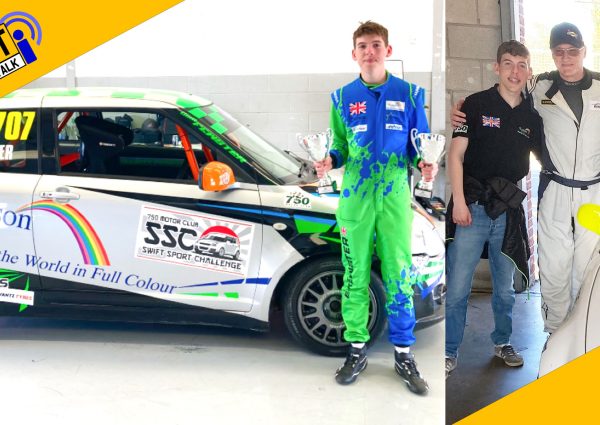
In his class, Elliott races a 1.3-litre Suzuki Swift. He emphasizes that it is essentially a £600 road car with a standard engine and gearbox, modified primarily for safety and suspension. This “level playing field” ensures that results are determined by driver talent rather than financial investment or superior machinery. Elliott recently returned to circuit racing at Donington Park, where he qualified P3 out of 35 cars and finished second in both races despite gearbox issues.
Racing with Dyspraxia
A significant portion of the episode is dedicated to Elliott’s experience racing with dyspraxia. He describes how the condition affects his coordination and processing speed, noting that it takes him longer to prioritize information. As a child, he was even scared of driving a manual car because he feared it would be too difficult, admitting he cried when he first tried at age 11.
However, Elliott explains that once his helmet goes on, he enters a state of “hyperfocus”. Everything else disappears, and he is entirely focused on the task at hand. Mike, who also has dyspraxia, shares a similar experience from a helicopter flight where intense concentration allowed him to overcome his usual coordination issues. Elliott notes that while he has to work harder than the “average” driver to process information, his success proves that it is possible to excel in motorsport with the condition. He cites Bobby Trundley as another successful driver with dyspraxia and autism.
The FIA Mentoring Program
The bond between Jules and Elliott was formed through the FIA/Motorsport UK mentoring program for Disability Motorsport. Jules was proposed as a mentor due to his racing experience and his professional background in corporate IT and sales coaching. He is one of only about 50 mentors worldwide in this specific scheme.
Jules views mentoring as distinct from traditional instruction. While an instructor simply tells a student what to do, a mentor works to understand the person and how they “tick”. In Elliott’s case, this means being careful not to provide too much information at once to avoid “cognitive overload”. Jules provides targeted, usable tips—such as how to gain time at a specific corner—which Elliott is then able to implement immediately on track.
The mentoring relationship extends beyond the racetrack; Jules has also assisted Elliott with practical life skills, such as preparing for job interviews. Elliott credits Jules’ support with helping him find the confidence to achieve podium finishes and believe in his own raw talent.
Looking Ahead
Looking to the future, Elliott has ambitious goals. Having found success in rallycross and junior saloons, he aims to compete in the Mini Cup and eventually move into TCR and the British Touring Car Championship (BTCC). His ultimate goal is to become the fastest British Touring Car Champion. Jules remains a steadfast supporter, praising Elliott’s “special” talent and self-belief. The episode concludes with details on how to follow Jules’ progress via his “Jules McBride Racing Coaching” pages on Facebook and Instagram.